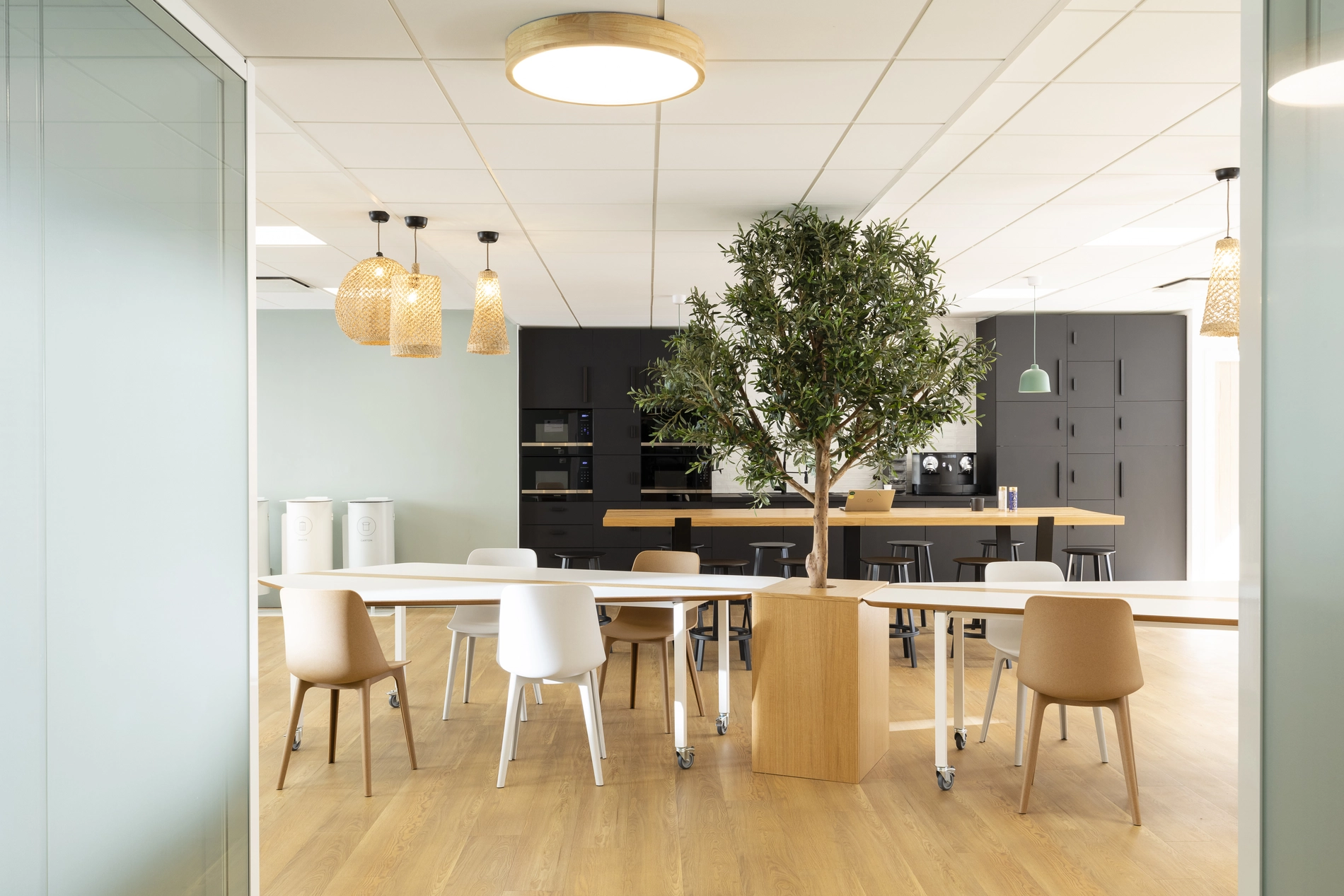



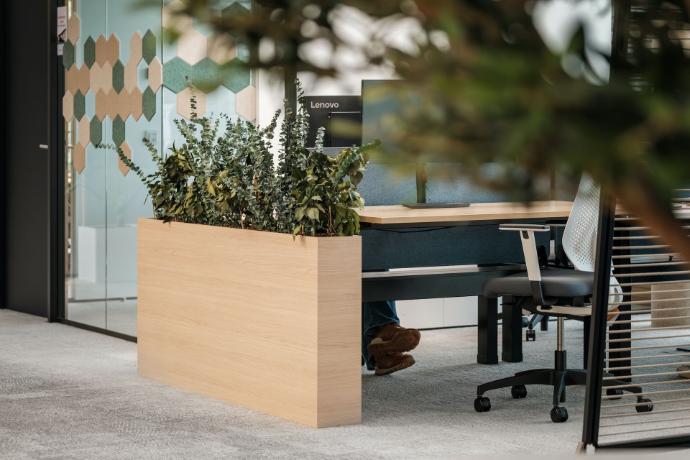
Stabilized plants have gained in popularity in recent years. It has to be said that they promise an ideal: a natural, maintenance-free look. But there are limits to their use. Tanaman helps you define the right conditions for integrating stabilized plants into your project. Find out more about the manufacture, advantages, disadvantages and applications of these plants.
At Tanaman, we offer a selection of stabilized plants, and we can also meet your landscaping needs with a mix of artificial, stabilized and natural plants.
Stabilized plants at Tanaman
Projects using stabilized plants
What is a stabilized plant?
A stabilized plant is a natural plant that has undergone a preservation process designed to maintain its appearance and suppleness without the need for regular maintenance.
This process involves replacing the sap with a preservative solution, usually glycerine-based, enabling the plant to retain its natural appearance. The stabilization process :
- 1. Harvesting at the optimum time: Plants are harvested when they reach their peak of beauty and ripeness.
- 2. Immersion in stabilizing solution: Freshly cut plants are immersed in a solution of glycerine, water and biodegradable stabilizers. This step gradually replaces the natural sap with the preservative solution.
- 3. Controlled drying: After immersion, plants are dried under specific conditions to fix the solution inside the plant tissue, guaranteeing durability and flexibility. This process ensures that stabilized plants retain their original appearance without the need for water, light or other conventional care.
Why choose stabilized plants?
Stabilized plants promise several very interesting advantages
- 1. Minimal maintenance: Unlike live plants, stabilized plants don’t need watering, pruning or fertilizing.
- 2. Durability: Thanks to stabilization, these plants can retain their appearance, offering a long-lasting decorative solution.
- 3. Adaptability: Stabilized plants can be placed in a variety of environments, including areas without natural light.
- 4. Natural aesthetics: as naturally preserved plants, they offer an authentic appearance that artificial plants sometimes struggle to reproduce.
Maintenance of stabilized plants
Although stabilized plants do not require regular maintenance, a few simple steps can help prolong their beauty:
- – Dusting: a light wipe with a dry cloth is all it takes to remove accumulated dust.
- – Location: Avoid placing stabilized plants near sources of intense heat or in direct sunlight to prevent discoloration.
- – Humidity: Although they tolerate ambient humidity, it’s best not to expose them to excessive moisture to avoid the risk of mildew.
By following these tips, stabilized plants can retain their brilliance without needing special care.
The disadvantages of stabilized plants
- 1. Fragility: Stabilized plants are delicate and can be damaged by excessive handling. We therefore recommend limiting direct contact.
- 2. Environmental sensitivity: Although they do not require light, they must be protected from direct sunlight and heat sources to avoid premature discoloration or drying.
- 3. Residual odour: The glycerine used in the stabilization process may give off a certain odour, especially in confined spaces.
- 4. Limited variety: Not all plant species are suitable for stabilization, which can restrict the choice for certain decorative compositions.
- 5. Initial cost: As the stabilization process is complex, the price of stabilized plants can be higher than that of natural or artificial plants. Plants stabilized by their natural origin have a better environmental image.
Carbon impact of stabilized plants
When we carried out a study with a specialized firm, we realized that it was flawed. Explanation: A stabilized plant is grown in South America, then stabilized in Spain. So there’s a lot of transport to get to your office. However, it is the cultivation of the initial plant and the glycerine that account for the majority of its environmental impact (84%). Its carbon footprint has been estimated at 47 kg CO2 by our firm. By comparison, an artificial plant has a carbon footprint of 17kg CO2. For natural plants, it all depends on where and how they are grown: South America or Europe, and with or without fertilizers. Its footprint ranges from 23 to 66kg CO2.
Stabilized plants therefore have a carbon footprint somewhere between natural and artificial. Lifespan of stabilized plants Stabilized plants, although said to be durable, have an average lifespan of 3 years. Its carbon impact can therefore be revised upwards, taking into account, for example, that it will have to be changed more regularly than an artificial plant.
Types of stabilized plants
Certain plants lend themselves particularly well to the stabilization process. Among the most commonly used are :
– Asparagus: Appreciated for its fine, light foliage, ideal for aerial compositions.
– Ferns: Their texture and density add a touch of freshness to interiors.
– Eucalyptus: Renowned for its silvery foliage and subtle fragrance, it is highly prized for decoration.
– Foliage and grasses: Add a natural, country touch to arrangements.
Palm: For an exotic, tropical ambience, stabilized palms are ideal.
– Little Poplar: With its delicate foliage, it adds an elegant touch to any arrangement.
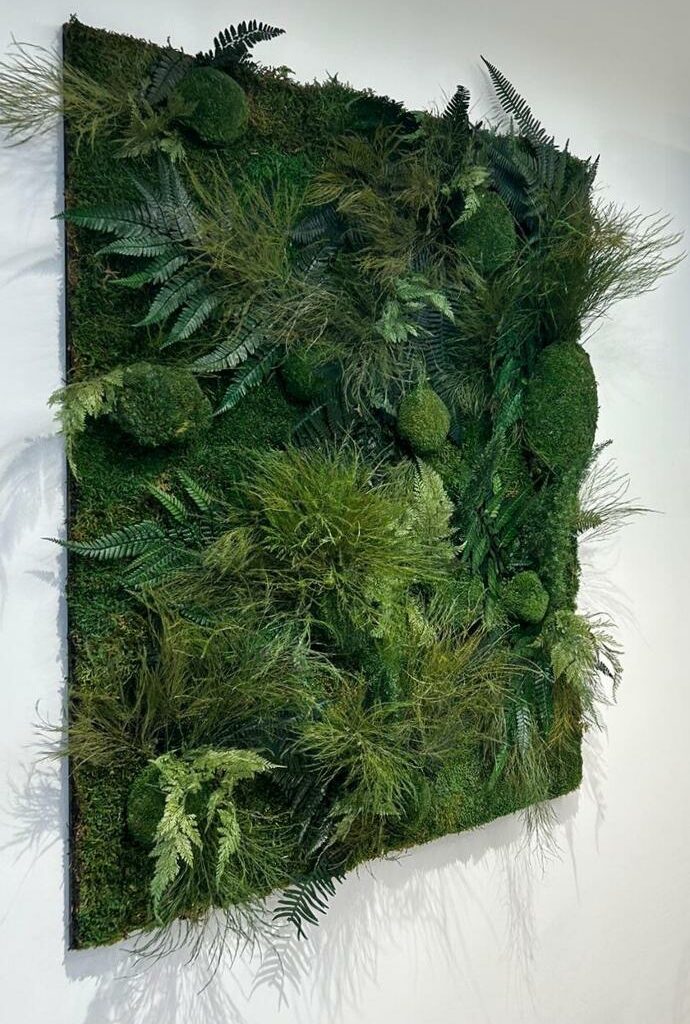
– Foam: Used in particular for green walls, it offers a soft texture and a soothing appearance.
– Papyrus: Its slender stems and unique foliage make it an original choice for decoration.
It is important to note that the availability of these plants can vary according to season and harvest. It is therefore sometimes necessary to adapt and consider alternatives depending on supplies.
Stabilized plants in professional spaces
Companies and commercial spaces are increasingly incorporating stabilized plants into their décor to enhance the customer experience and employee well-being.
– Offices and coworking spaces: many companies choose to integrate stabilized plant walls or plant compositions to add a touch of greenery, promoting a pleasant and stimulating working environment.
– Hotels and restaurants: These establishments use stabilized plants to create green atmospheres in lobbies, dining rooms or indoor terraces.
– Stores and boutiques: They can be used to create attractive natural decorations without having to manage the upkeep of real plants.
Examples of applications in professional spaces:
– Plant partitions to separate work areas
– Hotel accommodation with stabilized compositions
– Window decoration for a touch of elegant nature
– Meeting rooms with a green wall for a soothing environment
Our projects using stabilized plants
DISCOVER THE PROJECT Open Space – Luxembourg Groupe Apicil – Lyon