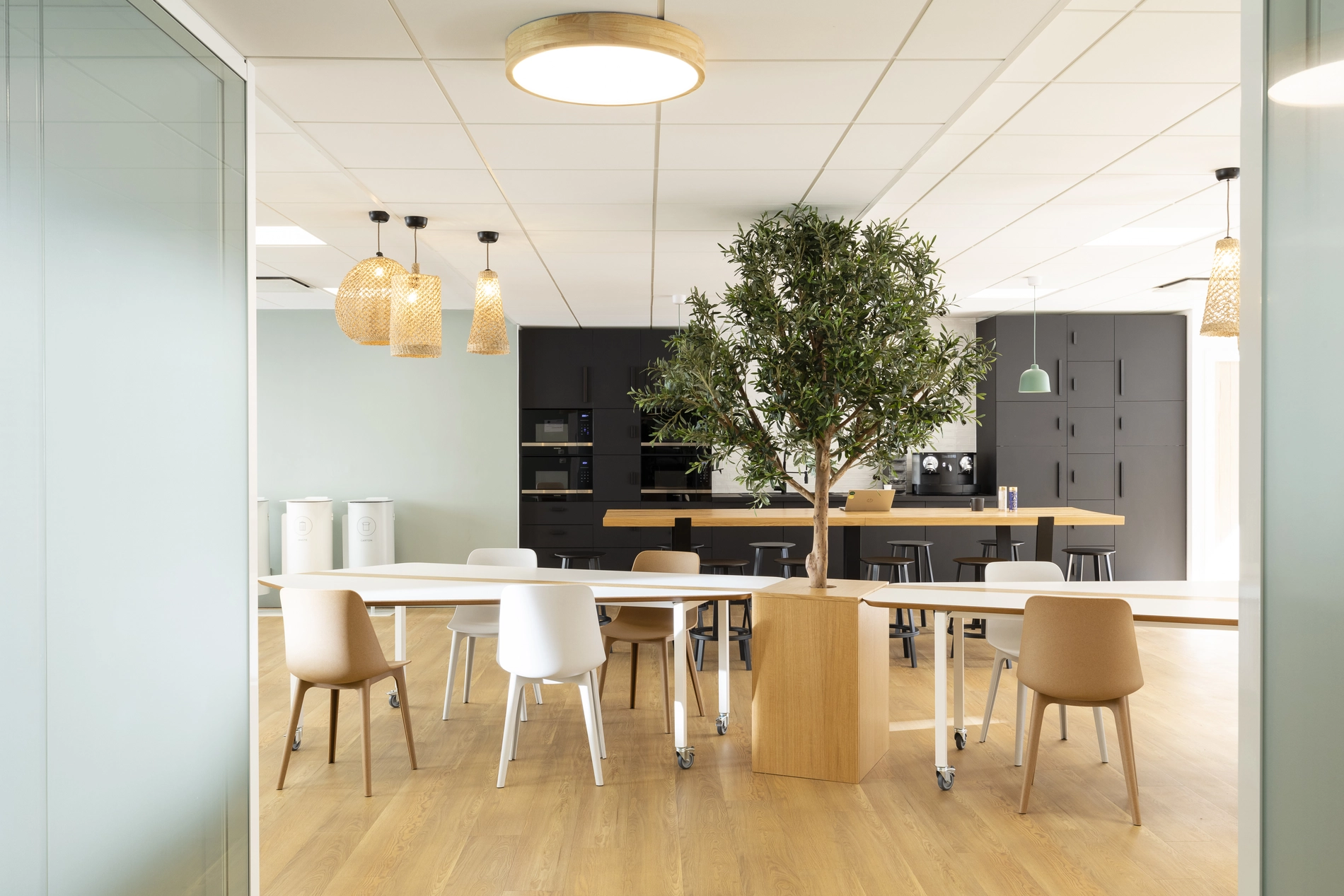



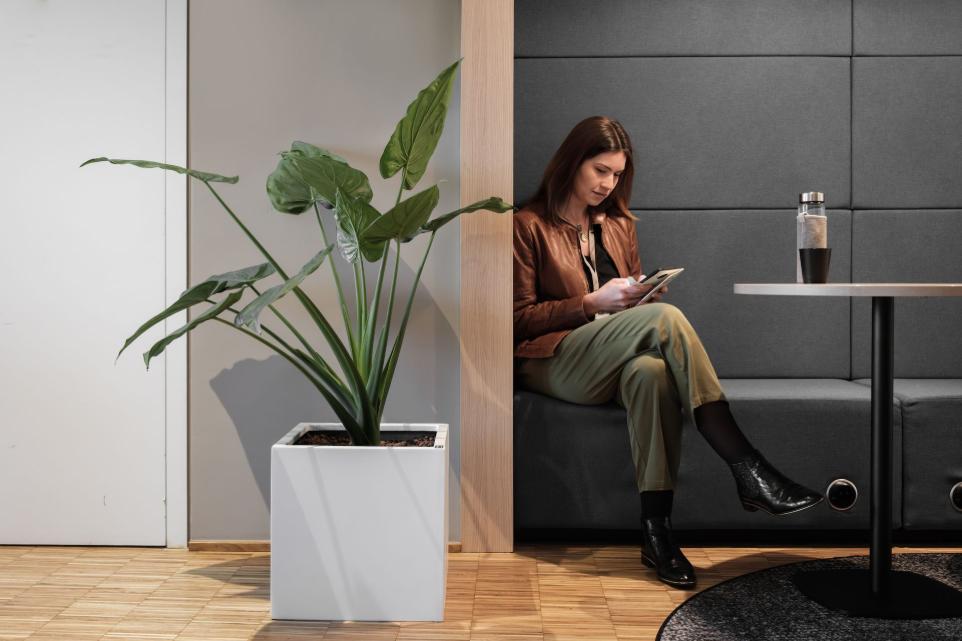
In an ever-changing professional world, where well-being in the workplace and brand image are becoming increasingly important, space planning is becoming a strategic issue. Among the simple, natural and aesthetic solutions available, the integration of living plants is particularly appealing to companies. In the imagination, natural plants improve air quality, add a touch of freshness and promote a soothing, productive atmosphere.
In this article, we decipher what’s real and what’s not, and guide you through how they can transform your offices, hotels, stores or restaurants.
Types of natural plants
There are two types of natural plants, the ones you regularly come across in garden centers: soil plants and hydroculture plants.
What are the differences between the two?
1. Plants in the ground
Earthen plants are the most common. Grown in potting soil, they offer a wide variety of species and require regular maintenance in terms of watering, pruning and repotting.
2. Hydroculture plants
Hydroculture plants grow not in soil, but in an inert substrate such as clay balls or sand. This type of cultivation allows better management of plant growth and hydration.
Plants for hydroponics can be grown directly in hydroponics, or they can be grown on land and then adapted over several months. This is often the case with horticulturalists.
Hydroponics offers a number of advantages in terms of plant maintenance: plants need less water, as clay retains water better, and are less susceptible to disease and parasites.
It’s therefore a good solution for professional projects, since it requires less maintenance. The whole point of greening a space is to bring nature into it. This is what biophilic design is all about: recreating bridges between man and nature, giving plants a place in furniture, for example. That’s why natural plants are the first answer.
Creating a beautiful environment will improve people’s well-being. Plants also help to project a positive brand image by conveying values of nature and sustainability. Although natural hydroponic plants offer a number of advantages, they remain sensitive to their environment: they need to be in bright spaces with a certain level of humidity. They need to be maintained at least once a month. That’s why Tanaman offers artificial and stabilized plants for professional indoor spaces. The carbon impact of natural plants Since plants are living beings, we assume that they have no environmental impact.
`While researching the horticultural sector at Tanaman, we realized that it wasn’t quite so straightforward. So we wanted to have some figures to compare the different types of plants. Taking into account the lifespans of the products, and taking an equivalent plant in the same Fiberstone pot, here are the results of a study carried out with an ecological transition firm:
– A natural hydroculture plant grown initially in South America generates 66kg of CO2.
– A natural “organic” plant grown in Europe has a low carbon impact, with 23kg of CO2. What matters is the birth of the plant and its lifespan. Natural plants in a professional environment have a lifespan of around 2 years.
Our range of potted plants and window boxes
We offer natural hydroculture plants in our various pot ranges.
Among them: Ficus, Alocasia, Strelitzia, Kentia, Clusia Rosea, etc… We also offer planters in Fiberstone tubs and planters or built-in planters for integration in your tubs or furniture.
Natural plants depend on seasons and crops, so we can’t offer them online.
Contact us by email: contact@tanaman.fr